
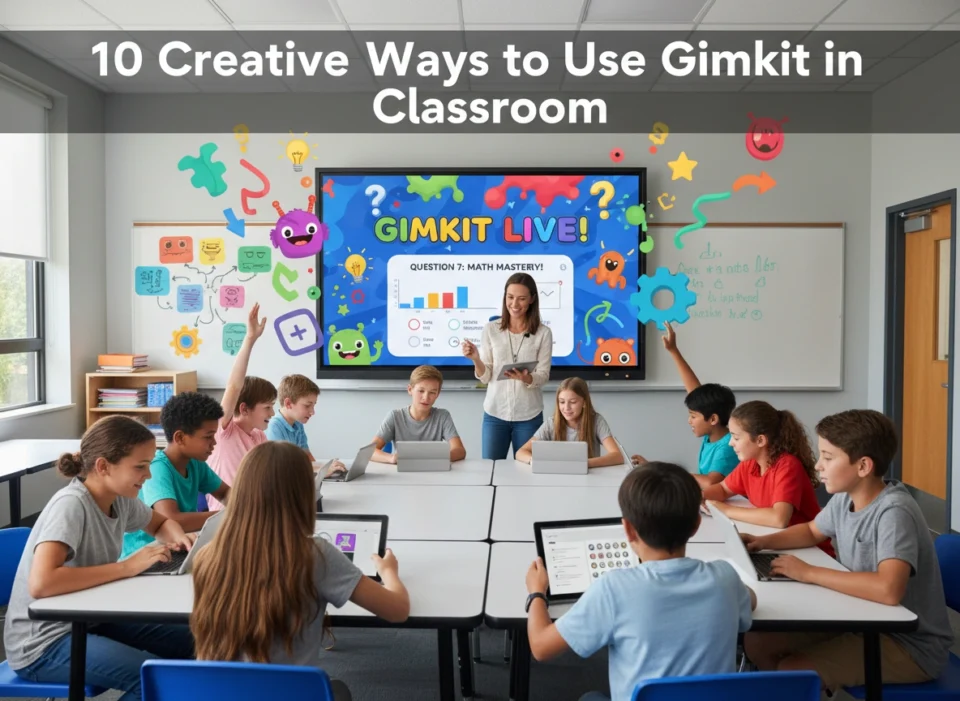
Educators are constantly searching for innovative tools that can capture students’ attention and make learning more effective. One platform that has gained significant traction is Gimkit, a game show-style learning tool that transforms traditional review sessions into exciting, competitive experiences. But what exactly is it, and how can you use it beyond a simple quiz?
Gimkit was designed by a high school student who wanted to create a more engaging alternative to standard classroom review games. It combines elements of strategy, competition, and collaboration, allowing students to answer questions at their own pace to earn in-game currency. They can then use this currency to purchase power-ups and upgrades, adding a strategic layer that keeps them invested in the content. This unique model moves beyond simple right-or-wrong answers, encouraging critical thinking and decision-making. The result is a dynamic learning environment that boosts engagement, reinforces knowledge, and makes learning genuinely fun.
While Gimkit is an excellent tool for straightforward vocabulary or concept review, its potential extends far beyond that. With a bit of creativity, you can integrate it into almost any subject area or lesson plan. Let’s explore ten creative ways to leverage Gimkit to create memorable and impactful learning moments in your classroom.
1. The Pre-Assessment Challenge
Instead of starting a new unit with a standard diagnostic test, use Gimkit to gauge prior knowledge in a low-stakes, engaging way. Create a kit with questions covering the key concepts you plan to teach. Frame it as a “challenge” where the goal is not to get every answer right, but to see what the class already knows collectively. This approach removes the anxiety often associated with pre-testing.
After the game, review the results. You can use the game report to identify common misconceptions or areas where students struggled. This data provides a valuable roadmap for your instruction, allowing you to tailor your lessons to address specific learning gaps from the very beginning. It also gets students excited about the upcoming topic by giving them a preview in a fun format.
2. The Collaborative “Kit-Building” Project
Turn your students into content creators by having them build a Gimkit kit as a group project. After completing a unit, divide students into small groups and assign each group a specific subtopic. Their task is to write a set of high-quality questions and answers based on their assigned material. This requires them to revisit their notes, identify key information, and think critically about how to frame questions effectively.
Once the groups have created their questions, you can compile them into a single, class-wide review kit. Playing a game with a kit created by the students themselves fosters a strong sense of ownership and pride. They are more invested in the game because they contributed to its creation. This method is an excellent way to reinforce learning, as the act of creating questions is a powerful study technique.
3. The “Escape the Room” Scenario
Transform a standard Gimkit session into an exciting narrative adventure. Develop a story where students are “trapped” in a virtual room and must answer questions correctly to find clues and escape. You can structure this by setting specific earnings goals. For example, tell students they need to earn a collective $1,000 to “unlock the first door” or purchase a specific upgrade to “reveal a hidden key.”
To make it more immersive, you can create simple physical props or digital slides that correspond to the story. Each time the class reaches a milestone in Gimkit, you reveal the next part of the narrative. This adds a layer of cooperative problem-solving to the competitive nature of the game, encouraging students to work together toward a common goal.
4. The Vocabulary Jigsaw
This method is perfect for introducing or reviewing a large set of vocabulary words. Before the game, divide the vocabulary list among small groups of students. Each group becomes the “expert” on their assigned words, responsible for understanding the definitions, parts of speech, and how to use them in a sentence.
Next, create a Gimkit kit that includes all the vocabulary words from the entire list. During the game, students will encounter words they haven’t personally studied. This encourages them to consult with the “expert” group for that word. It promotes peer-to-peer teaching and communication, breaking down the lesson into manageable chunks while still ensuring every student is exposed to all the material.
5. The “Fact or Fiction” Investigation
Challenge your students’ critical thinking skills with a “Fact or Fiction” themed Gimkit. Create a kit where each question presents a statement related to your topic. The answer choices are simply “Fact” or “Fiction.” To make it truly effective, include statements that are subtly incorrect or commonly misunderstood.
After the game, dedicate time to discussing the statements that tricked the most students. This opens up a valuable conversation about misinformation, the importance of source-checking, and the nuances of the topic. This format works especially well for history, science, and current events, teaching students not just the content, but how to analyze and evaluate information.
6. The “Character and Quote” Match-Up
For literature or history classes, Gimkit can be a powerful tool for reviewing key figures and their words. Create a kit where the questions are famous quotes, and the answer choices are the characters or historical figures who said them. Alternatively, you could provide a character’s name and have students choose the correct description of their role or significance.
This helps students make connections between words, ideas, and individuals. It moves beyond simple plot recall and encourages a deeper understanding of character development, motivation, and historical impact. It’s a fast-paced way to review dozens of important details that might otherwise feel tedious to memorize.
7. The Step-by-Step Problem Solving Race
Gimkit isn’t just for humanities; it’s also fantastic for math and science. For multi-step problems, break down the process into individual questions. For example, the first question could be to identify the correct formula, the second to plug in the right numbers, and the third to solve for the final answer.
By structuring the kit this way, you can pinpoint exactly where students are struggling in the problem-solving process. If many students get the first question wrong, you know you need to review the underlying concepts. If they falter on the last step, they may need more practice with the calculation itself. This diagnostic approach helps you provide targeted support more efficiently.
8. The “Choose Your Own Adventure” Review
Leverage Gimkit’s assignments feature for a personalized review experience. Create several different kits, each focusing on a specific skill or topic within a larger unit. For instance, in a grammar unit, you might have separate kits for commas, semicolons, and subject-verb agreement.
Allow students to choose which kit they want to work on based on what they feel they need to practice most. This empowers them to take control of their own learning journey. You can also use data from a previous test to assign specific kits to students who need reinforcement in certain areas, creating a truly differentiated review session.
9. The Live Research Challenge
Combine research skills with quick thinking in this dynamic activity. Pose a question to the class and give them a short amount of time (e.g., 60 seconds) to find the answer using approved online resources or their textbooks. Then, present the question in Gimkit and have them answer.
This format is excellent for teaching digital literacy and efficient research skills. It trains students to quickly locate and verify information under pressure. It also keeps the energy high, as the “race” is not just in answering the Gimkit question, but in finding the correct information first.
10. The Year-End “Greatest Hits” Tournament
As the end of the semester or school year approaches, use Gimkit to host a comprehensive review tournament. Compile a “greatest hits” kit that includes the most important—or most challenging—questions from every unit covered. You can structure this as a multi-day event, with qualifying rounds leading up to a final championship.
This serves as a fun and comprehensive final exam review that covers a vast amount of material in an engaging way. You can even offer small prizes or bragging rights to the winners to increase the excitement. It’s a perfect way to celebrate a year of learning and end on a positive, high-energy note.
Bringing It All Together
Gimkit is more than just a digital flashcard game; it is a versatile platform that can be adapted to fit countless educational goals. By thinking creatively, you can transform it from a simple review tool into a dynamic engine for collaboration, critical thinking, and student-led learning. These ten ideas are just a starting point. The real power of Gimkit lies in its flexibility and its ability to make learning an experience that students look forward to. We encourage you to take one of these ideas, adapt it to your own classroom, and see how it transforms your next lesson.
