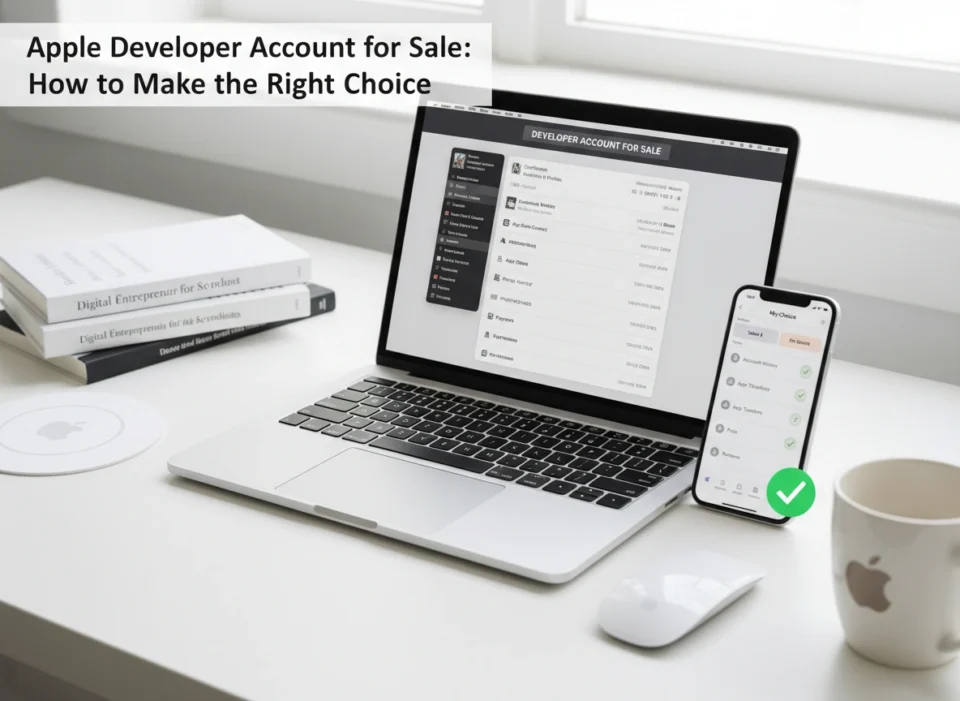
The iOS ecosystem is a walled garden, and the only gatekeeper is Apple. For any individual or business hoping to reach the billion-plus active iPhone users worldwide, possessing an Apple Developer Account is not just an option—it is a mandatory requirement. This account acts as your passport, granting you the ability to publish apps, access beta software, and utilize advanced capabilities like CloudKit and Apple Pay.
However, the process of obtaining a new account can sometimes be slow, or businesses may have specific needs for aged accounts. This has created a secondary market where people search for “Apple Developer Account for sale.” While purchasing an existing account can offer shortcuts, it is a path fraught with complexity. Navigating this marketplace requires a sharp eye for detail, a strong understanding of compliance, and a clear awareness of the risks involved.
This guide explores why this market exists, the risks you face, and how to make a smart, safe choice if you decide to proceed.
Why the Secondary Market Exists
Why would someone buy an account rather than just sign up for a new one directly from Apple for $99? It seems counterintuitive, but several valid business reasons drive this demand.
Instant Credibility and Ranking
In the world of App Store Optimization (ASO), age matters. Older accounts—those that have existed for several years without policy violations—are often perceived as having more “trust” within the ecosystem. Some developers believe that publishing an app on an aged account can lead to faster indexing and potentially better initial search rankings compared to a brand-new account created yesterday.
Bypassing lengthy Verification Processes
Apple has significantly tightened its verification process in recent years. Depending on your region, creating a corporate (organization) account now requires a D-U-N-S number, notarized documents, and phone verification. This process can take weeks. Startups operating on tight launch deadlines often look to buy pre-verified accounts to bypass these administrative hurdles and launch immediately.
Regional Restrictions and Payment Issues
Developers in certain countries face immense difficulties paying the annual $99 fee due to international banking sanctions or lack of supported payment methods. Buying an account that is already set up and paid for can be the only way for talented developers in restricted regions to access the global market.
The Legal and Ethical Gray Area
Before exchanging money, you must understand the landscape you are entering. Buying and selling accounts operates in a significant gray area regarding Apple’s Terms of Service (ToS).
Technically, Apple’s agreements generally prohibit the transfer of an account from one entity to another without Apple’s express permission (which usually occurs during a formal business acquisition). When you buy an account “off the shelf” from a third-party seller, you are often technically violating the user agreement.
The “Transfer App” Feature vs. Account Takeover
There is a legitimate way to move assets: Apple allows you to transfer apps between accounts. This is the clean, ethical way to acquire a portfolio. However, buying the login credentials to an account itself is risky. If Apple detects that an account has suddenly changed ownership across borders or IP addresses without a formal organizational change, they may flag or terminate the account.
Key Considerations Before Buying
If you determine that purchasing an account is necessary for your business strategy, do not proceed blindly. You need to vet the asset just as you would real estate or a used car.
1. Account Type: Individual vs. Organization
This is the most critical distinction.
- Individual Accounts: These are tied to a specific person’s legal name. You cannot change the seller’s name on the account easily. If you buy this, you are effectively publishing under a stranger’s name. This looks unprofessional and poses massive verification risks later.
- Organization Accounts: These are tied to a legal entity. These are much more valuable because, theoretically, you can acquire the entity (the company) and thus legitimately own the account. This is the safer route for serious businesses.
2. Account History and Health
You aren’t just buying access; you are buying a reputation. If the previous owner used the account to spam the App Store, publish malware, or violate user privacy, the account carries a “shadow ban” or a high risk of termination.
- Check for Strikes: Ask for proof that the account has no prior rejections or warnings from Apple Review.
- Previous Apps: What was published before? If the account was used for low-quality “shovelware” or gambling apps, stay away.
3. Verification Status
Ensure the account has fully passed the identity verification steps. For organization accounts, verify that the D-U-N-S number matches the entity you are dealing with. If the account is flagged for re-verification (which happens periodically), you will need the original owner’s documents. If you cannot contact them, the account becomes useless.
Risks and Challenges
The risks of buying a developer account are not hypothetical; they result in real financial loss for developers every day.
The “Linked Account” Ban
Apple uses sophisticated fingerprinting to link accounts. If the seller you buy from has sold 50 other accounts, and one of those accounts gets banned for fraud, Apple may “chain ban” every account associated with that seller’s device, IP, or payment method. You could lose your investment overnight through no fault of your own, simply because the seller was “dirty.”
Recovery Scams
A common scam involves a seller transferring the credentials to you, waiting for you to pay, and then using the account recovery process to take the account back. Since the account was originally registered in their name or with their recovery email, they have the upper hand in a dispute with Apple support.
Loss of Revenue
If you build a successful app on a purchased account and Apple subsequently terminates that account for suspicious activity, your app is removed from the store. You lose your user base, your recurring revenue, and your brand reputation instantly. Apple rarely reinstates accounts banned for account trading violations.
How to Ensure a Safe Purchase
If you weigh the risks and decide to proceed, follow these strict protocols to protect your investment.
Use a Reputable Escrow Service
Never send crypto or direct bank transfers to an anonymous seller. Use a trusted middleman service (Escrow) that holds the funds until you have successfully taken full control of the account and verified its status. If the seller refuses escrow, walk away immediately. It is a scam.
Prioritize “Clean” Organization Accounts
Focus your search on Organization accounts where the seller is willing to transfer the actual legal entity (LLC or Inc) along with the account. This provides a paper trail that legitimizes the transfer of ownership in Apple’s eyes.
The 2FA Handover
Ensure you receive the device or phone number associated with the Two-Factor Authentication (2FA), or that the seller is available to help you migrate the 2FA to your own devices immediately. Without controlling the 2FA, you do not control the account.
Change Everything Immediately
Once you have access:
- Change the Apple ID email.
- Change the password.
- Update the security questions.
- Revoke all existing certificates and provision profiles.
- Generate new API keys.
This ensures the previous owner cannot use backdoors to access your builds or data.
Conclusion
The decision to search for an “Apple Developer Account for sale” is often born out of necessity or a desire for speed. While the secondary market offers genuine benefits—such as bypassing verification delays and acquiring aged trust—it is a minefield of potential bans, scams, and compliance issues.
For the vast majority of developers, the slow, official route of creating a new account is the only 100% safe option. It guarantees that you own your intellectual property and that your revenue stream is secure. However, if you must buy, treat it as a high-stakes business acquisition. Due diligence is your only defense. Verify the history, secure the transfer through escrow, and understand that until you build your own reputation with Apple, you are building your house on borrowed land. Make the right choice by prioritizing long-term security over short-term convenience.
