
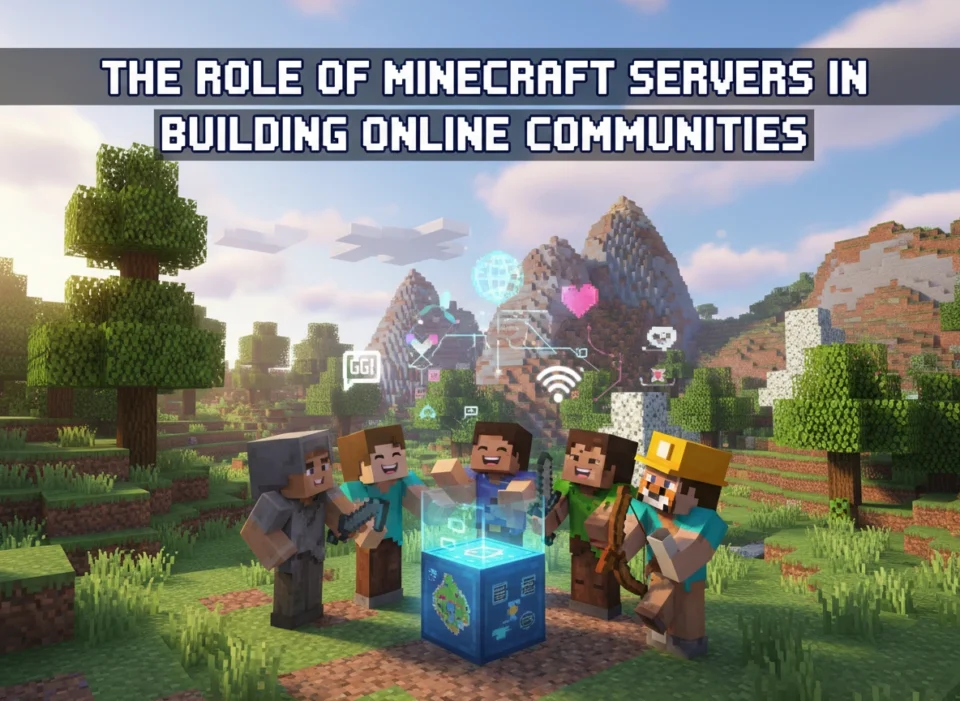
Minecraft launched over a decade ago as a simple sandbox game about breaking and placing blocks. It quickly evolved into a global phenomenon that transcended traditional gaming boundaries. At the heart of this evolution lies the multiplayer experience, driven primarily by player-hosted servers. These servers act as more than just platforms for cooperative gaming; they function as complex, thriving online communities. By providing a shared virtual space, Minecraft servers facilitate deep social connections, encourage collaborative creativity, and offer invaluable lessons in community management and digital citizenship.
Fostering Collaboration, Creativity, and Social Interaction
The core mechanics of Minecraft inherently promote teamwork. When players join a multiplayer server, they enter a persistent world where their actions impact others. In Survival Multiplayer (SMP) servers, individuals often pool resources to survive the game’s environmental hazards. Building a secure base, gathering enough food, and defending against hostile mobs require coordination and trust.
This environment naturally leads to the formation of towns, factions, and complex player-driven economies. Players take on specific roles based on their interests and skills. One person might become the community farmer, another the lead architect, and someone else the resident redstone engineer, creating automated machines to simplify daily tasks. This division of labor mirrors real-world societal structures and forces players to communicate, negotiate, and collaborate to achieve larger goals.
Creativity also flourishes in these shared spaces. Creative servers provide players with unlimited resources, transforming the game into a massive, collaborative canvas. Groups of builders spend hundreds of hours constructing sprawling cities, recreating historical landmarks, or designing intricate fantasy landscapes. The social aspect amplifies this creativity. Builders share techniques, critique each other’s work, and combine their unique styles to produce masterpieces that no single person could achieve alone.
Popular Servers and Their Unique Contributions
Different servers cater to different types of communities, each contributing uniquely to the broader Minecraft ecosystem. Examining a few well-known examples highlights the diversity of these digital spaces.
Hypixel
As one of the largest and most popular Minecraft servers globally, Hypixel operates more like a massive online theme park than a traditional survival world. It hosts tens of thousands of concurrent players engaged in various custom mini-games. Hypixel builds community through friendly competition, leaderboards, and cooperative game modes. It also provides a robust social framework, allowing players to form guilds, join parties, and chat in dedicated lobbies. The server demonstrates how custom game design within Minecraft can bring massive, diverse groups of people together.
Hermitcraft
Hermitcraft represents the pinnacle of the intimate, high-trust SMP community. It is a private, invite-only server populated by popular content creators. The Hermitcraft community operates on an honor system, featuring a complex diamond-based economy and massive, interconnected mega-bases. While the server itself is closed to the public, its impact on the broader community is immense. Millions of viewers watch the creators’ videos, forming a massive meta-community that discusses the server’s events, creates fan art, and builds their own servers modeled after the Hermitcraft ruleset.
Wynncraft
Wynncraft showcases the technical extremes of Minecraft servers. It is a fully functional Massively Multiplayer Online Role-Playing Game (MMORPG) built entirely within the Minecraft engine. Wynncraft requires no external mods, yet it features custom weapons, a vast map, quests, and a leveling system. The community here revolves around traditional MMORPG elements: forming parties to tackle difficult dungeons, trading rare loot, and participating in server-wide events. Wynncraft proves that Minecraft servers can transcend the base game to create entirely new genres and communities.
The Technical and Social Aspects of Running a Server
Creating and maintaining a thriving Minecraft community requires significant effort behind the scenes. Server administrators must navigate a complex web of technical and social responsibilities.
On the technical side, running a public server involves managing server hardware, optimizing performance to prevent lag, and configuring a myriad of plugins or mods. Administrators must ensure the server can handle the load of multiple players exploring, building, and interacting simultaneously. They use software like Spigot or Paper to optimize server performance and add custom features. Additionally, setting up databases for player data, managing backups to prevent progress loss, and securing the server against malicious attacks are crucial daily tasks.
The social aspect is equally demanding. A successful server needs a clear set of rules and a framework for enforcing them. Administrators must design a fair and engaging environment. They establish the server’s theme, create onboarding processes for new players, and organize community events to keep engagement high. Furthermore, integrating the server with external communication platforms, such as Discord, has become an essential part of the process. These external hubs allow players to chat outside the game, share screenshots, and receive important updates, cementing the community bond.
Challenges Faced by Server Administrators
Building a community is rarely smooth sailing. Server administrators face numerous challenges that require patience, diplomacy, and technical know-how.
Moderation remains one of the most persistent hurdles. In any online space, toxic behavior, harassment, and cheating can fracture a community. In Minecraft, this often takes the form of “griefing”—the act of intentionally destroying another player’s creations. Administrators must deploy anti-griefing tools, investigate player disputes, and issue bans when necessary. Balancing a welcoming atmosphere with strict rule enforcement takes a heavy toll, often leading to staff burnout.
Funding presents another significant challenge. High-quality server hosting, custom domain names, and premium plugins cost money. Many administrators rely on player donations or offer cosmetic perks in exchange for financial support. However, they must carefully navigate Mojang’s End User License Agreement (EULA), which prohibits selling items that provide an unfair gameplay advantage. Balancing the budget without alienating the player base or breaking the rules requires careful planning.
Technical instability also threatens communities. Every time Mojang releases a new Minecraft update, server owners scramble to update their systems. Plugins often break, worlds can corrupt, and performance issues can spike. During these transition periods, communication with the player base is vital to maintain trust and patience.
The Impact on Players’ Lives
Despite the challenges, the impact of these servers on players’ lives is profoundly positive. For many, a Minecraft server serves as a crucial “third place”—a social environment separate from the home and the workplace or school.
Players form deep, lasting friendships that often transcend the game itself. It is common for server members to support each other through real-life personal struggles, celebrate milestones, and eventually meet in person. For individuals who struggle with social anxiety or geographical isolation, these virtual communities offer a safe, accessible space to build confidence and interpersonal skills.
Furthermore, participating in these communities often leads to tangible skill development. Many young players learn the basics of computer networking, Linux server administration, and Java programming simply because they wanted to improve their Minecraft server. Others develop leadership and conflict-resolution skills by serving as moderators or running player factions. These digital spaces act as incubators for technical and soft skills that carry over into academic and professional settings.
The Future of Minecraft Servers
As technology advances, the potential for Minecraft servers to shape online communities continues to expand. The ongoing development of cross-play capabilities allows players on different devices—from high-end PCs to mobile phones—to share the same virtual space, breaking down hardware barriers and unifying fractured player bases.
Future servers will likely leverage artificial intelligence for more efficient moderation and dynamic content generation, easing the burden on volunteer staff. We can also expect even more sophisticated game modes and virtual economies that rival standalone games in their complexity. Ultimately, the true legacy of Minecraft servers does not lie in the blocks placed or the items crafted, but in the enduring human connections forged within these shared digital worlds. They stand as a testament to the power of video games to bring people together, foster cooperation, and build communities that thrive long after the computer is turned off.
Please visit website for more info.
