
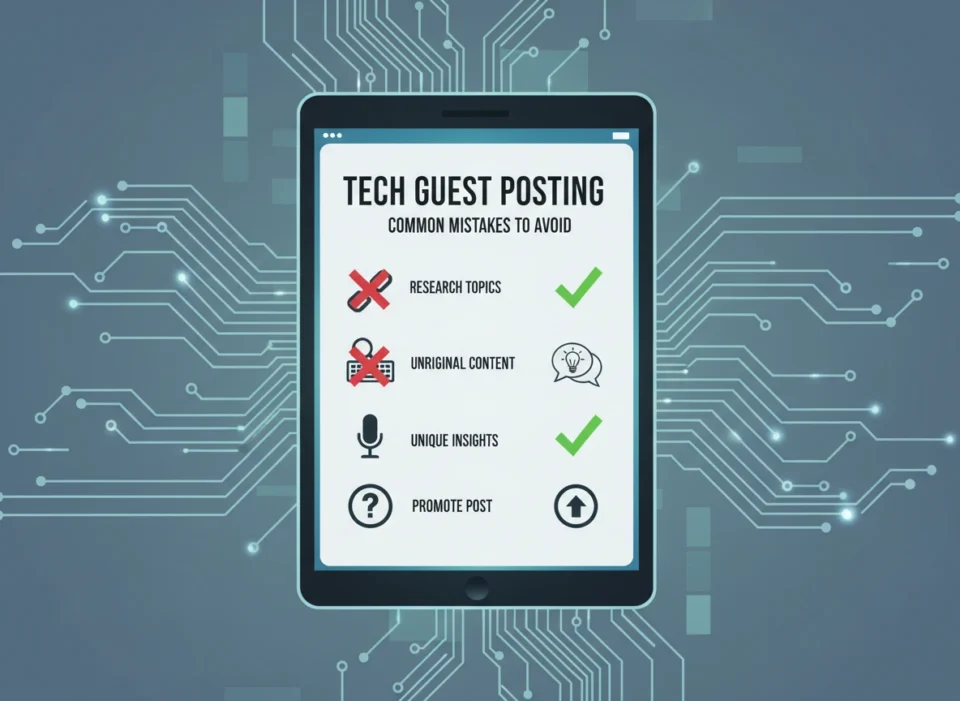
Securing a guest post on a reputable technology blog offers a massive opportunity to build authority, drive targeted traffic, and improve your search rankings. However, the technology niche is highly competitive and fiercely guarded by editors who demand precision, expertise, and originality. Many marketers and writers stumble before their pitch even reaches the editor’s desk.
Understanding the unique demands of tech publications is the first step to success. Editors receive hundreds of pitches daily, and they can spot a generic, poorly researched article from a mile away. If you want to stand out, you need to know exactly what not to do.
This guide breaks down the most frequent pitfalls writers encounter when contributing to tech blogs. By the end of this post, you will know how to craft compelling pitches, write engaging content, and build lasting relationships with top-tier technology publishers.
Ignoring the Target Audience’s Technical Proficiency
One of the most frequent errors in tech writing is misjudging the audience’s level of expertise. Technology blogs cater to vastly different crowds. A blog focused on enterprise software developers expects deep dives into coding frameworks and system architecture. On the other hand, a consumer tech site wants accessible reviews of the latest gadgets.
When you write a beginner-level article for an advanced audience, you lose credibility immediately. Conversely, if you fill a consumer-focused piece with dense technical jargon, readers will bounce off the page.
How to avoid this:
Before you write a single word, spend an hour reading the target blog. Look at the comments section to see what questions readers ask. Note the terminology the authors use. Tailor your language, examples, and depth of technical detail to match the site’s established standard.
Pitching Outdated or Exhausted Topics
Technology moves at a blistering speed. What was groundbreaking six months ago is often obsolete today. Editors constantly reject pitches that cover topics their site has already published multiple times or subjects that no longer matter to the industry.
Pitching an article titled “The Benefits of Cloud Computing” in the current year will almost certainly earn you a deletion. Editors want fresh perspectives, emerging trends, and unique case studies.
How to avoid this:
Use the site’s search function to check if they have already covered your proposed topic. If they have, find a new angle. Instead of a general overview, pitch a highly specific article, such as how machine learning algorithms optimize cloud storage costs for mid-sized healthcare providers. Specificity demonstrates expertise and provides clear value to the reader.
Disregarding Submission Guidelines
Editorial guidelines exist for a reason. They streamline the review process and ensure all published content meets the site’s quality standards. Yet, a surprising number of writers completely ignore these instructions.
Whether the guidelines specify a maximum word count, dictate a specific heading structure, or require pitches to be sent via a specific form rather than an email, ignoring them signals to the editor that you are careless and difficult to work with.
How to avoid this:
Read the write-for-us page thoroughly. Create a checklist of their requirements and review your pitch and final draft against it. If they ask for two topic ideas, do not send five. If they request a specific subject line format, use it exactly. Respecting the editor’s time is the easiest way to get your foot in the door.
Over-Optimizing and Keyword Stuffing
While search engine optimization matters, writing solely for search engines destroys the reader experience. Tech professionals read articles to solve problems or learn new skills, not to sift through unnatural paragraphs stuffed with exact-match keywords.
Google’s algorithms heavily penalize content that reads unnaturally. Editors will reject content that sacrifices flow and readability for the sake of SEO.
How to avoid this:
Write for humans first. Place your primary keyword in the title, the introduction, and naturally within a few headings. Use semantic variations and related terms rather than repeating the exact same phrase. Focus on comprehensively answering the reader’s intent rather than hitting a specific keyword density.
Poorly Integrated Backlinks
The primary motivation for many marketers engaging in technology guest posting is to earn a valuable backlink. However, forcing a link into an irrelevant sentence is a glaring mistake. Editors fiercely protect their outbound links. If your link looks like spam or directs readers to a low-quality landing page, the editor will strip it out or reject the article entirely.
How to avoid this:
Ensure your link provides genuine value to the reader. Link to comprehensive guides, original research, or deeply relevant case studies rather than a homepage or a direct sales page. The anchor text should flow naturally within the context of the sentence. If you have to twist the narrative to fit your link, it does not belong there.
Skimping on Data and Original Research
Tech audiences are analytical. They value data, evidence, and verifiable facts over vague opinions. A common mistake is writing a piece full of broad claims without any supporting statistics or real-world examples.
Saying “cybersecurity threats are increasing” is weak. Stating “ransomware attacks on small businesses increased by 40% in the last quarter, according to [Source]” builds immediate trust and authority.
How to avoid this:
Back up every major claim with recent data from credible sources. Link to original surveys, reputable research firms like Gartner or Forrester, or official company reports. Whenever possible, include your own proprietary data or personal case studies. First-hand experience is the most valuable currency in tech content.
Failing to Edit and Proofread
Grammatical errors, typos, and formatting issues instantly destroy your credibility as a professional writer. If an editor opens your draft and sees basic spelling mistakes in the first paragraph, they will likely discard the entire piece. Tech writing requires precision, and your grammar should reflect that exactness.
How to avoid this:
Never submit your first draft. Step away from the article for a few hours, then read it out loud to catch awkward phrasing. Use professional editing tools to check for grammar, tone, and readability. Ensure your heading hierarchy is logical and your paragraphs are short and scannable.
Neglecting Post-Publication Engagement
The guest posting process does not end when the article goes live. Many writers make the mistake of abandoning their post once it is published. They fail to promote it to their own audience or engage with readers in the comments section.
Editors want contributors who help drive traffic and foster community engagement. Ignoring this step damages your relationship with the publication.
How to avoid this:
Share the published article across your social media channels, tagging the publication and the editor. Monitor the comments section for the first few days and reply to readers’ questions thoughtfully. This shows the editor that you are a dedicated partner, making them much more likely to accept your future pitches.
Conclusion
Succeeding in tech guest posting requires more than just decent writing skills. It demands a deep understanding of the target audience, a commitment to originality, and a strict adherence to editorial standards. By avoiding these common mistakes, you position yourself as a reliable, authoritative voice in the tech community.
Focus on delivering actionable value, backing up your claims with hard data, and respecting the editor’s time. Take a moment to review your current pitching strategy. Are you tailoring your ideas to specific audiences? Are you providing well-researched, perfectly formatted drafts? Start applying these principles today, and watch your acceptance rate soar.
