
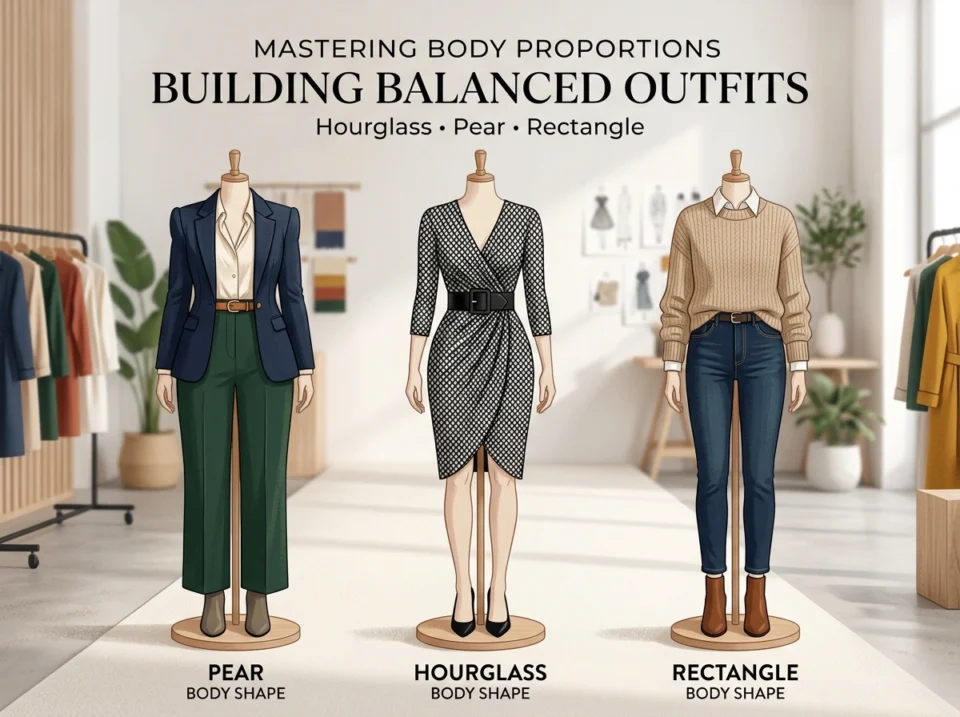
Great style has less to do with your size and everything to do with balance. When your outfit works with your natural proportions, you look polished, put-together, and confident. And confidence, more than any trend, is what makes clothing shine.
The good news? You do not need a stylist on speed dial or a closet full of designer labels to dress well. You just need to understand your body proportions and a few timeless principles that help you highlight what you love while creating harmony from head to toe.
Whether you are shopping in Los Angeles, layering up for a Chicago winter, or dressing for the office in Atlanta, these ideas work across every region, climate, and personal style. Let’s break down the major body types and the outfit-balancing strategies that flatter each one.
Understanding Body Proportions First
Before diving into specific body types, it helps to know what “balance” actually means in fashion. Balance is about creating visual harmony between your shoulders, waist, and hips. When one area feels wider or narrower than you’d like, the right clothing choices can even things out and draw the eye where you want it.
Most people fall into one of five common body shapes: hourglass, pear, apple, rectangle, and inverted triangle. You may see a bit of yourself in more than one, and that’s completely normal. Use these categories as a helpful guide, not a strict rulebook.
The Hourglass Shape
An hourglass figure features a balanced bust and hips with a clearly defined waist. Your natural curves are already balanced, so the goal is simply to show off that waistline rather than hide it.
Outfit-balancing tips:
- Choose fitted or wrap styles that follow your natural curves.
- Add a belt at your waist to emphasize your defined middle.
- Pick high-waisted pants and skirts that hug your frame.
- Avoid boxy, oversized pieces that hide your shape and can make you look larger than you are.
Wrap dresses, tailored blazers, and pencil skirts are your best friends. Think of clothing that skims your body without clinging too tightly.
The Pear Shape
If your hips are wider than your shoulders and bust, you likely have a pear shape (also called triangle). The aim here is to draw attention upward and add a little visual weight to your upper half.
Outfit-balancing tips:
- Wear bright colors, patterns, and interesting details on top.
- Choose tops with boat necks, structured shoulders, or statement sleeves.
- Keep bottoms simple with darker, solid colors.
- Try A-line skirts and bootcut or straight-leg pants that gently balance the hips.
Adding a bold necklace or a structured jacket brings the eye up to your shoulders and face, creating an even, balanced silhouette.
The Apple Shape
An apple shape carries more weight around the midsection, often with a fuller bust and slimmer legs. The goal is to elongate your torso, define your waistline, and show off those great legs.
Outfit-balancing tips:
- Choose empire-waist tops and dresses that flow away from the middle.
- Opt for V-necks and open necklines to lengthen your upper body.
- Wear fitted pants or skirts to highlight your legs.
- Use structured jackets that skim rather than cling.
Vertical lines are especially flattering here. A long, open cardigan or a duster coat creates a lean, streamlined look that draws the eye downward.
The Rectangle Shape
A rectangle shape has shoulders, waist, and hips that are fairly similar in width, with a less defined waistline. The strategy is to create curves and the illusion of a more defined middle.
Outfit-balancing tips:
- Add belts to create the appearance of a waist.
- Choose peplum tops and ruffled details for extra dimension.
- Try layering to build shape and texture.
- Pick skirts and dresses with volume, like full or A-line styles.
Because your frame is naturally balanced, you have room to experiment. Play with color blocking and bold details to add curves wherever you’d like them.
The Inverted Triangle Shape
If your shoulders and bust are broader than your hips, you have an inverted triangle shape. The goal is to soften the upper body while adding volume to the lower half for balance.
Outfit-balancing tips:
- Choose wide-leg pants, flared jeans, and full skirts to build up your lower half.
- Keep tops simple with softer necklines like scoop or V-necks.
- Avoid heavy shoulder details or padding.
- Add prints and lighter colors to your bottoms.
The idea is to move attention down and outward, creating a smooth, even line from shoulders to hips.
Universal Styling Principles That Work for Everyone
No matter your body type, a few core styling techniques help you create balanced, flattering outfits every time.
Color Blocking
Color blocking uses solid blocks of contrasting colors to reshape how the eye reads your body. Wear a darker shade where you want to minimize and a brighter shade where you want to add visual interest. For example, a pear shape might pair a vivid coral top with dark navy trousers to draw the eye upward.
Layering
Layering adds depth, texture, and structure. A long cardigan creates vertical lines that lengthen your frame, while a cropped jacket can highlight your waist. Layering also gives you flexibility across seasons, which is handy whether you’re facing a mild California autumn or a snowy New England winter.
Proportion Play
Proportion play is all about pairing loose with fitted. If you wear a flowy top, balance it with slim bottoms. If you choose wide-leg pants, tuck in a fitted top. This contrast keeps your outfit from looking shapeless and helps highlight your natural balance.
Vertical Lines and Monochrome
Vertical stripes, long necklaces, and single-color outfits all create an unbroken line that makes you look taller and leaner. A monochrome look in one shade is an easy, elegant way to achieve this instantly.
The Rule of Thirds
Dividing your outfit into thirds rather than equal halves feels more natural to the eye. Try tucking a top in slightly or wearing a cropped jacket over a longer piece to break up your look in a pleasing, proportional way.
Fit Matters Most
Even the priciest clothing looks off if it doesn’t fit right. A quick trip to a tailor can transform an average outfit into a standout one. Hemming pants, taking in a waist, or adjusting shoulder seams costs little but makes a huge difference in how balanced and intentional you look.
Dress for Confidence, Not Just Trends
Trends come and go, and they vary widely across the country. What feels fresh in Miami might look different from what’s popular in Seattle. Instead of chasing every trend, focus on what makes you feel comfortable and confident. Balanced dressing is a tool, not a set of hard rules.
Your body is unique, and your style should celebrate that. Use these tips as a starting point, then experiment until you find combinations that feel authentically you.
Final Thoughts
Creating balanced outfits is about understanding your proportions and dressing in a way that brings out your best. Once you know your body type and master a few simple principles like color blocking, layering, and proportion play, getting dressed becomes easier and a lot more fun.
Stand tall, wear what makes you feel great, and let your confidence do the rest. Style, after all, is simply the art of feeling good in your own skin.
Please visit official site for more info.
