Launching a startup in the United States requires more than just a brilliant product or a disruptive service. Gaining visibility in an increasingly crowded digital marketplace is often the deciding factor between a business that scales and one that stagnates. Search engine optimization represents a critical acquisition channel for new companies, and at the core of effective SEO lies a robust backlink profile. Backlinks act as digital votes of confidence, signaling to search engines that your website is credible, authoritative, and worthy of ranking highly in search results.
For early-stage companies, acquiring these digital endorsements organically can be a painstakingly slow process. Startups often launch with zero domain authority and face the daunting task of outranking entrenched competitors who have spent years building their online presence. This reality forces many founders and marketing teams to evaluate alternative strategies to accelerate their digital growth and establish an immediate foothold in their target market.
This comprehensive guide examines the strategic role of acquiring link placements for new businesses. We will explore how investing in off-page SEO influences search visibility, the mechanics behind acquiring quality links, and how to balance rapid growth with sustainable, long-term search engine performance.
The Competitive Landscape for New Businesses in the US
The United States boasts one of the most dynamic and densely populated startup ecosystems in the world. From Silicon Valley tech ventures to direct-to-consumer e-commerce brands in New York, thousands of new companies enter the market every month. This intense concentration of innovation brings a severe level of competition for consumer attention. When a potential customer searches for a solution online, the businesses that appear on the first page of Google capture the overwhelming majority of the traffic and revenue.
Established enterprises hold a distinct advantage in this arena. They possess seasoned domains with thousands of inbound links, massive content libraries, and dedicated marketing departments. A new USA-based startup launching a pristine, zero-authority domain is effectively invisible to search engines during its initial months. Google and other search algorithms require time and data to trust a new website, a period often referred to colloquially as the “sandbox” phase.
Overcoming this initial barrier organically requires a massive investment in content marketing and digital PR, which takes significant time to yield dividends. Startups operating on limited runway and tight venture capital timelines rarely have the luxury of waiting six to twelve months just to begin appearing for relevant search queries. This environment necessitates proactive marketing tactics that can safely expedite the authority-building process.
Understanding the Mechanics of Buying Backlinks
To effectively maneuver through the SEO landscape, startup founders must understand how link acquisition actually works. Search algorithms use inbound links to assess the relevance and trustworthiness of a web page. When a high-authority website links back to your startup’s domain, it passes “link equity” to your site, thereby improving your own domain’s authority metrics.
The process of acquiring these links requires rigorous outreach, relationship building, and content creation. Many startups choose to partner with specialized agencies to manage this complex workflow. When companies choose to buy backlinks, they are typically funding a comprehensive digital PR and outreach campaign. Professionals identify highly relevant, USA-based websites with genuine organic traffic and strong Domain Rating (DR) metrics. They then pitch guest articles or secure niche edits—placements within existing, aged articles that already rank well.
Quality control is the most critical element of this mechanism. Professional link building relies heavily on manual outreach to ensure placements occur on legitimate platforms rather than automated link farms. The goal is to secure contextual, editorially placed links that provide real value to readers while passing powerful SEO signals back to the startup’s primary landing pages.
Positive Impacts: Accelerating Authority and Visibility
The most immediate benefit of a strategic link-building campaign is the rapid acceleration of domain authority. Instead of waiting for users to naturally discover and link to your content, a proactive acquisition strategy injects authority directly into your most important commercial pages. This targeted approach allows startups to dictate which products or services receive the strongest SEO push.
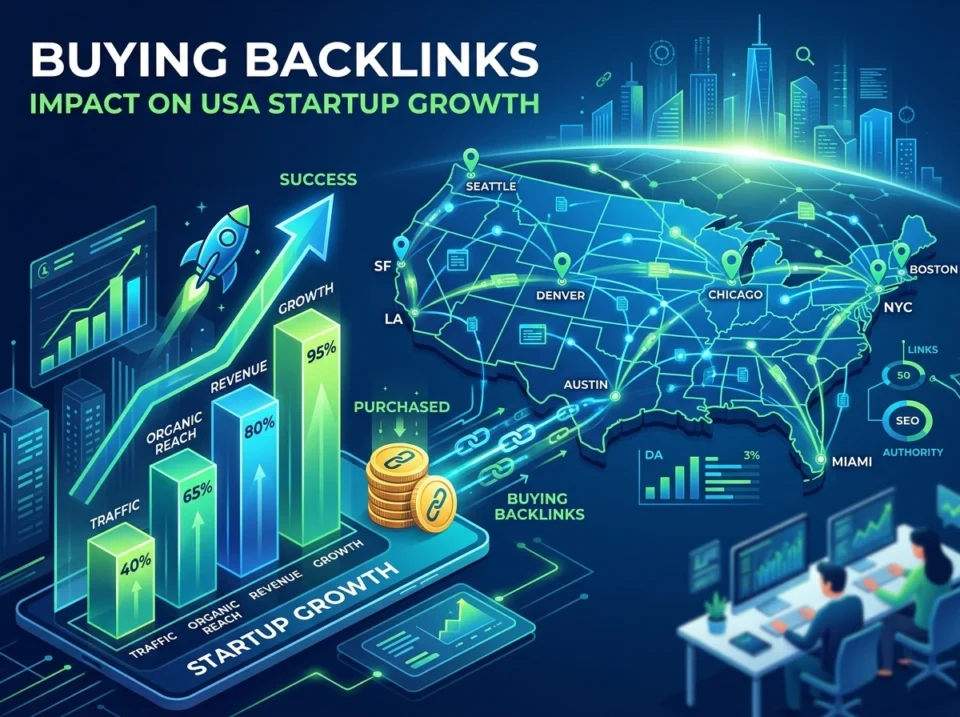
When executed correctly, the impact on visibility can be profound. Startups frequently observe significant ranking improvements within a typical timeframe of four to eight weeks after quality links are indexed. Pages that were previously languishing on page three or four of search results can rapidly climb into the top ten positions, bringing a commensurate increase in qualified organic traffic.
Furthermore, being featured on respected industry blogs and news outlets enhances brand credibility. When prospective customers or investors research your startup, discovering positive mentions and links from authoritative websites validates your business model and establishes trust early in the customer journey.
Strategic Considerations and Risk Management
While the upside of acquiring backlinks is substantial, the practice requires careful risk management. Search engines frequently update their algorithms to penalize manipulative tactics. Startups must prioritize quality over quantity, focusing exclusively on white-hat methodologies to safeguard their digital assets.
The greatest risk comes from interacting with low-quality providers who utilize Private Blog Networks (PBNs), automated spam tools, or irrelevant foreign domains. These tactics can trigger algorithmic penalties that completely remove a startup’s website from search indexes. Recovering from such a penalty is a costly and time-consuming endeavor that most young companies cannot afford.
Risk mitigation involves strict vetting of potential link sources. A healthy target domain should demonstrate stable organic traffic, a clean outbound link profile, and relevance to the startup’s specific industry. Transparent reporting and clear communication with your SEO partner are essential to ensure that every acquired link aligns with search engine guidelines and contributes positively to the brand’s reputation.
Impact on Search Engine Rankings and Organic Traffic
The correlation between a strong backlink profile and high search engine rankings is one of the most consistent truths in digital marketing. For startups, moving from obscurity to the first page for high-intent keywords transforms the entire business trajectory. Organic traffic is inherently highly qualified; these are users actively seeking the solutions your startup provides.
A well-executed link strategy not only boosts the specific pages receiving the links but also lifts the overall domain authority. This rising tide effect means that every piece of content published on the startup’s blog will rank faster and higher than it would have previously. Consequently, the cost per acquisition (CPA) for new customers begins to drop significantly as free organic traffic supplements expensive paid advertising channels.
It is important to view these ranking improvements through an analytical lens. Startups should carefully track the anchor text used in their link placements to maintain a natural-looking profile. Over-optimizing with exact-match commercial keywords can appear unnatural to algorithms. A diverse mix of branded, descriptive, and keyword-rich anchor text yields the safest and most effective ranking improvements.
Long-term Growth vs. Short-term Gains
The most successful USA-based startups view link acquisition as one component of a holistic marketing engine, rather than a standalone shortcut. While purchasing high-quality placements provides the initial momentum needed to break through the noise, long-term sustainability requires a broader strategy.
Short-term gains from targeted link campaigns should be leveraged to amplify other marketing initiatives. The traffic generated from improved rankings can be captured through email sign-ups, retargeted with paid social ads, and converted into early case studies. Meanwhile, the startup must continue to produce exceptional, highly shareable content that naturally attracts secondary links over time.
Relying entirely on acquired links without building a fundamentally strong website will yield diminishing returns. Search engines increasingly prioritize user experience, mobile optimization, and content helpfulness. Therefore, the long-term growth of the startup depends on marrying aggressive off-page SEO strategies with flawless on-page execution and stellar product delivery.
Navigating SEO for Startup Success
Securing a competitive advantage in the United States market demands decisive action and strategic investments. Building a robust digital presence from scratch is an uphill battle, but it is a necessary hurdle for any startup aspiring to achieve scale. Understanding how search engines evaluate authority allows founders to allocate marketing budgets toward tactics that deliver measurable, high-impact results.
Investing in off-page authority through careful, professional link placement provides the necessary catalyst for early-stage growth. By prioritizing ethical practices, rigorous quality control, and contextual relevance, startups can safely bypass the initial hurdles of search engine obscurity. When integrated into a broader, user-centric marketing strategy, a strong backlink profile becomes the foundational asset that drives sustainable organic traffic, reduces customer acquisition costs, and positions the brand for long-term industry leadership.
