
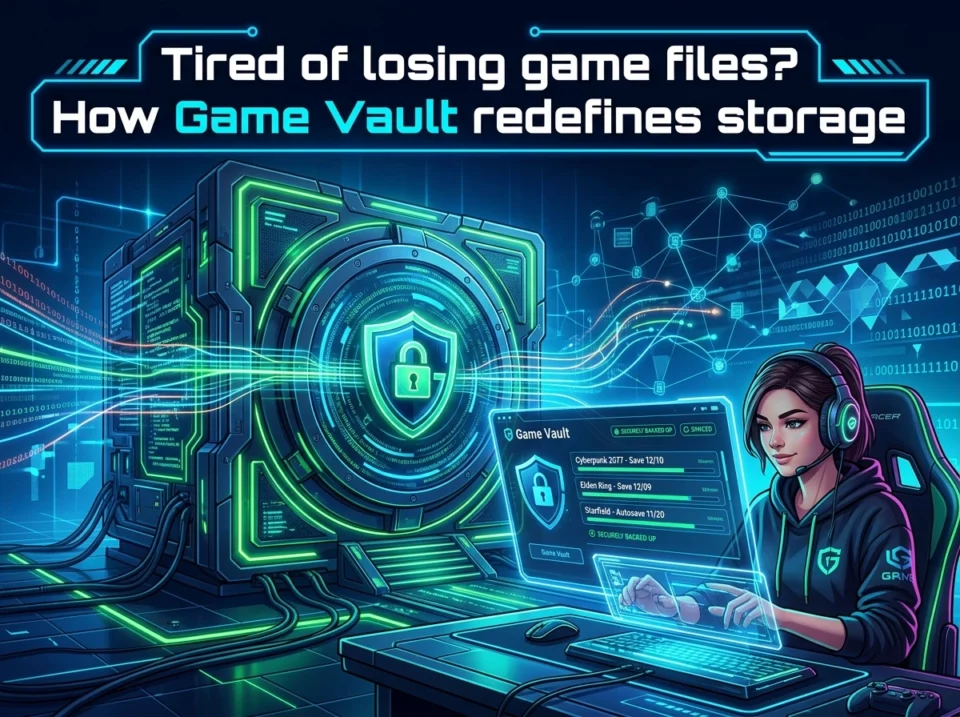
Game Vault is a self-hosted, source-available gaming platform that organizes and manages DRM-free game files. The Game Vault software redefines storage by combining an automated backend server with a Steam-like client interface, allowing gamers to index files, track playtime, and enrich metadata directly from their personal servers.
Modern video games require a massive amount of storage space. A single premium title can easily consume over 100 gigabytes of hard drive capacity, forcing players to constantly juggle files, delete old favorites, and redownload software. This constant data management creates friction that ruins the entertainment experience. Gamers need a better way to store, organize, and access their growing digital libraries.
Many players rely on external hard drives or basic file folders to keep their DRM-free games safe. This manual approach quickly becomes chaotic. Finding a specific installer inside a maze of poorly named folders takes time. Furthermore, simple file storage lacks the polished, visually appealing interface that modern digital storefronts provide. Players want the convenience of a professional game launcher combined with the control of local file ownership.
The Game Vault gaming platform bridges this gap perfectly. By allowing you to host your own game library, the Game Vault software transforms a basic file server into a rich, interactive gaming hub. This platform automatically scans your directories, identifies your titles, and pulls in official cover art and metadata. You get the aesthetic appeal of a major commercial launcher while retaining complete control over your raw installation files.
Different types of gaming experiences require different storage strategies. If you want to play casino-style mobile titles on a platform like Game vault, your storage needs are minimal because the application handles the heavy lifting via cloud connectivity. However, if you are a PC gamer preserving massive DRM-free installation files, a dedicated storage solution like the Game Vault software becomes mandatory. This blog post explores exactly how this platform solves modern storage problems and enhances your daily gaming routine.
What are the biggest game storage challenges in 2025?
Data management is an escalating problem across the entire technology sector. According to 2025 data projections from Rivery, the global volume of data will reach an astonishing 181 zettabytes. Video games contribute significantly to this data explosion. As developers push for higher fidelity textures, uncompressed audio, and massive open worlds, installation sizes continue to skyrocket.
Players who prefer DRM-free games face a unique set of obstacles. Digital Rights Management (DRM) ties a game to a specific online storefront. DRM-free games give you actual ownership of the installer files, meaning you can back them up and play them offline forever. Storing hundreds of gigabytes of raw executable files, ZIP archives, and ISO images requires extreme organizational discipline.
When you store files manually, you lose out on the tracking features built into commercial launchers. You cannot easily see how many hours you have played a specific title. You do not get automatic updates, nor do you get a beautiful grid of cover art to browse when deciding what to play next. Traditional storage makes your expensive game collection look like a sterile spreadsheet.
What is the Game Vault gaming platform?
The Game Vault gaming platform is a source-available, self-hosted software solution designed specifically for organizing DRM-free video games. The system operates using two distinct components: a backend server and a client application. The backend server runs via Docker on your personal hardware or network-attached storage (NAS) device. The client application runs on your personal computer, acting as the visual storefront.
When you install the Game Vault software, you direct the backend server to the specific folders where you keep your game installers. The system then scans these directories automatically. Because the Game Vault gaming platform uses intelligent game type detection, it understands the difference between a standalone executable file, a compressed archive, and a complex folder structure.
Once the backend server identifies a game, it communicates with various online video game databases. It downloads high-quality metadata, including release dates, developer information, genres, and cover art. The client application then displays this information in a highly polished, user-friendly interface. You can browse your personal collection exactly as you would browse a massive online store, except every file is stored securely on your own hardware.
How does Game Vault redefine self-hosted game storage?
The traditional method of storing DRM-free games involves nested folders, manual renaming, and desktop shortcuts. The Game Vault software redefines this entirely by introducing intelligent automation.
How does the automatic game indexing feature work?
The Game Vault backend server continuously monitors your designated storage folders. When you drop a new DRM-free game file into your storage drive, the server immediately detects the addition. The automatic game indexing system parses the file name and folder structure to determine the exact title of the game.
After identifying the title, the automatic metadata enrichment system activates. This feature pulls relevant data from public databases to flesh out the game’s profile. You do not need to manually search for box art or type out the game’s description. The Game Vault gaming platform handles the entire visual presentation automatically. This turns a messy folder of random executable files into a curated, searchable library.
Why choose Game Vault over traditional external hard drives?
Choose the Game Vault software if intelligent organization matters more than simple file dumping. A traditional external hard drive provides raw capacity, but it provides zero context. When you connect a standard hard drive, you must navigate through the file explorer to find your games.
The Game Vault gaming platform sits on top of your storage hardware to provide a rich software layer. Instead of double-clicking a generic folder, you launch the Game Vault client application. You can filter your library by genre, sort by release date, or search for specific developers. The client application also handles the extraction and installation of the games automatically, removing the need for third-party unzipping tools. This seamless workflow mirrors the convenience of commercial launchers while keeping your files safely under your own roof.
What are the key features and benefits of Game Vault?
The Game Vault gaming platform offers a robust suite of tools that appeal to data hoarders, casual players, and network administrators alike. By unifying storage and presentation, the software delivers several distinct benefits.
How does playtime tracking enhance the storage experience?
One of the most requested features for any game launcher is playtime tracking. The Game Vault software includes a built-in game progress tracking system. When you launch a title through the client application, the software monitors your session length.
This tracking works completely offline. If your internet connection drops, the Game Vault client continues to record your statistics locally. Once your connection to your backend server is restored, the client syncs the data. This allows you to build a comprehensive history of your gaming habits over time. You can even compare your progress and playtime statistics with other users on your server, adding a social element to a purely local storage solution.
What parental controls does the Game Vault platform offer?
Managing a large family gaming library requires strict access controls. The Game Vault backend server features a comprehensive multi-user authentication system. As the server administrator, you can create separate accounts for different household members.
The software includes specific parental control features and role-based access control. You can restrict certain accounts from viewing or downloading mature titles based on the metadata ratings. If you store both family-friendly platformers and violent action games on the same hard drive, the Game Vault gaming platform ensures that younger users only see the appropriate content on their client application.
How do configuration and server management work?
Advanced users require deep control over their self-hosted applications. The Game Vault software provides highly configurable server settings. Administrators can access an Admin UI to manage users, monitor server health, and review activity logs.
The platform supports OAuth2 authentication, allowing users to implement single sign-on (SSO) for easier network integration. Furthermore, the backend features WebSocket support for real-time updates across all connected clients. If the administrator updates a game file or edits metadata on the server, the changes reflect instantly on the client applications without requiring a manual refresh. The system also includes database backup and restoration tools, ensuring your meticulously organized metadata remains safe during hardware upgrades.
What does the future hold for self-hosted game storage?
The demand for self-hosted solutions will continue to grow as digital ownership becomes more complex. Commercial storefronts frequently remove titles due to expired licensing agreements. When a game disappears from a commercial server, users who rely exclusively on cloud storage lose access to their purchases.
Self-hosting protects gamers from these arbitrary corporate decisions. The future of game storage heavily relies on platforms that empower the user. The Game Vault gaming platform represents a major step forward by proving that local storage does not have to be ugly or difficult to manage.
As the Game Vault software continues to develop, the extensible plugin framework will allow the community to build custom integrations. We will likely see deeper integrations with third-party metadata providers, enhanced media players for gameplay trailers, and even more sophisticated game extraction algorithms. The source-available nature of the platform ensures that the community can audit the code and contribute to its ongoing evolution.
Elevate your game storage strategy today
Managing a massive collection of DRM-free games requires more than just a large hard drive. It requires intelligent software that respects your time and enhances your user experience. The Game Vault gaming platform delivers exactly that.
By combining automated metadata enrichment, seamless installation workflows, and robust multi-user controls, this self-hosted software redefines how we interact with local files. You retain the security of physical data ownership while enjoying the luxurious interface of a premium storefront.
Take control of your digital library. Set up a Docker container, deploy the Game Vault backend server, and experience the ultimate way to store and play your DRM-free game collection.
Frequently asked questions about Game Vault
How much does the Game Vault gaming platform cost to use?
The core Game Vault software is free to download and self-host. The developers offer a premium tier called GameVault+ that unlocks additional features for users who wish to support the project financially.
How long does it take to set up the Game Vault server?
Setting up the backend server generally takes about 15 to 30 minutes for users familiar with Docker. Once the container is running, the time required for automatic game indexing depends entirely on the size of your game collection and the speed of your storage drives.
What are the main alternatives to the Game Vault software?
The primary alternatives include manual file management using standard operating system folders, or using desktop-only frontends like Playnite or LaunchBox. Choose the Game Vault gaming platform if you specifically need a client-server architecture to stream downloads across a local network to multiple users.
Who is the Game Vault gaming platform built for?
The Game Vault software is designed for data hoarders, game collectors, and self-hosting enthusiasts who own large libraries of DRM-free video games. It is the ideal solution for users who want complete control over their files without sacrificing a premium user interface.
